Call Anytime
+91 7019229973
Adith Crop Technologies Pvt Ltd > Knowledge Centre
Knowledge Centre
Arecanut Crop Info & Fertigation.
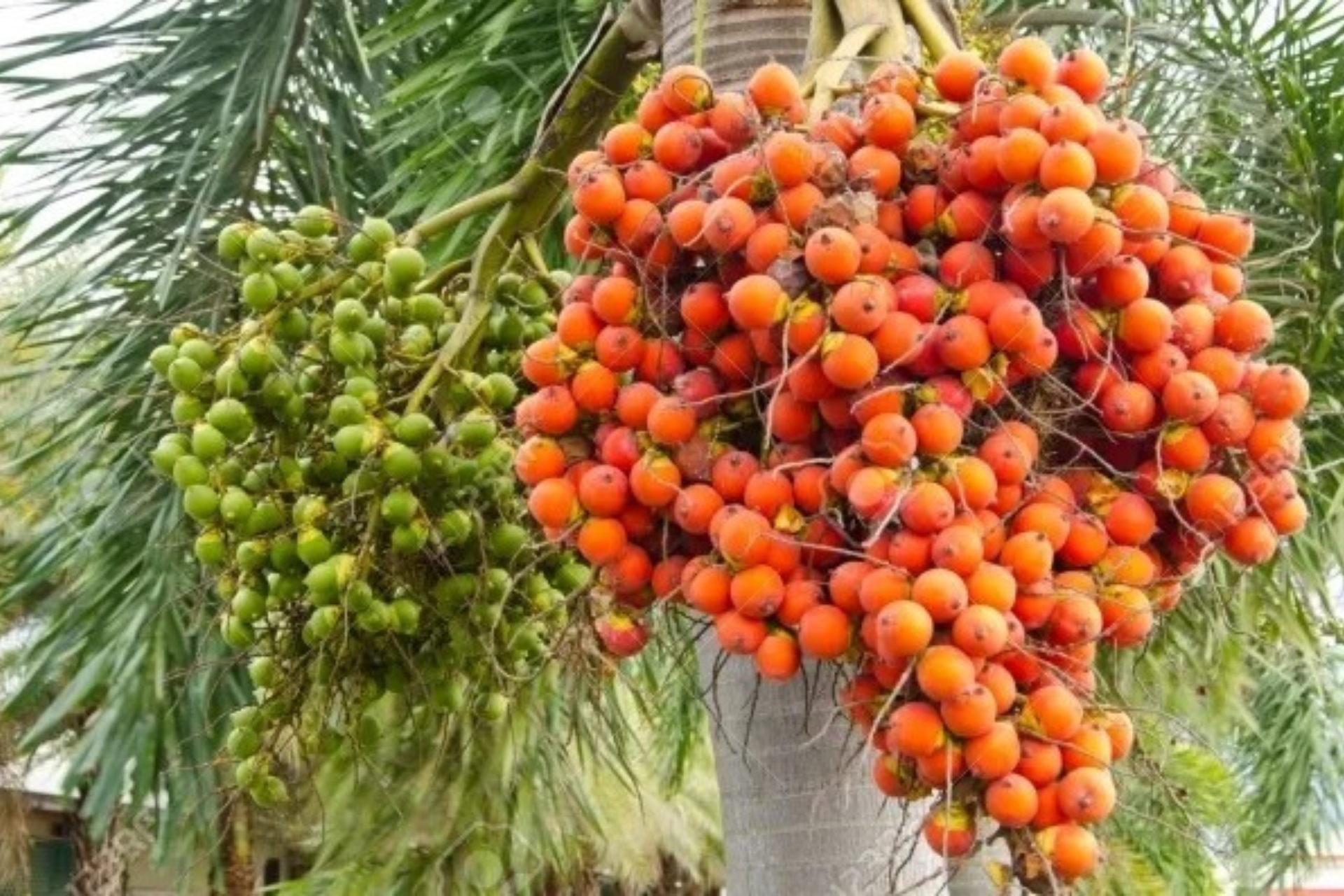
- Arecanut’, botanically known as Areca catechu, is a tropical plant found all over South East Asia. This is an important commercial crop of the region and also forms part of ritual offerings in Hindu religion.
- ADiTH portfolio includes Water soluble fertilizers for Fertigation and Soil Application through Drenching, With innovative plant nutrition schemes and highly efficient application methods,
- In India Arecanut it is grown in Karnataka, Kerala, Assam, Maharashtra, West Bengal and parts of Tripura. We are offering customised complete nutrition solutions starting with key Commercial crop Arecanut with experienced agronomists.
- Importance : Important commercial crop for Coastal & central Karnataka district farmers of Shimoga, Chitradurga, Davangere, Tumkur, Uttarakannada, Dakshina Kannada & Udupi.
- India is the largest producer of arecanut and at the same time largest consumer also.
- ROI : Arecanut crop is one among the highest ROI crop under commercial crop, where revenue will be Rs.3 to 6 Lakhs per acre.
- Challenges : Improper Nutrient Management leads to Less yields, Low Productivity, Physiological Disorders, Pest and Diseases,
- Need of the hour : The future of Arecanut Farming needs reduction in cost of production with increased yield. Precision farming will become important under such circumstances. The trend of applying excess inputs to achieve higher yield has resulted in excess soil fertility. This may lead to nutrient imbalances, less response to input application, higher incidence of pests and diseases and lower profits. The incidence of disorders like crown choking, crown bending, shortened internodes and oblique nodes are increasingly noticed. Unless these issues are resolved, arecanut will not be a profitable crop in future.
- Climate: The cultivation of arecanut primarily thrives within the latitudes of 28º north and south of the equator. It exhibits optimal growth within a temperature range of 14ºC to 36ºC, while temperatures below 10ºC and above 40ºC have detrimental effects on its development. Extreme temperature conditions and significant diurnal variations are not favorable for the robust growth of areca nut palms.
- The suitable regions for areca nut cultivation in Karnataka range from areas with an annual rainfall of 750 mm in the plains to 4,500 mm in the lush Malnad regions. In arid regions, where there are prolonged periods of dry weather, irrigation is necessary to ensure the well-being of the palms. However, it’s important to note that areca nut crops cannot thrive at altitudes exceeding 1000 m MSL due to their vulnerability to low temperatures.
- Soil: The most cropped land is located on gravelly laterite soils of red clay type. It may also thrive in rich clay loam soils. Arecanut cultivation is not ideal for sticky clay, sandy, alluvial, brackish, or calcareous soils. Seeding: Arecanut can only be propagated by seeds. The selection and growing of arecanut seedlings consists of four steps: selection of mother palms, selection of seed nuts, germination and raising of seedlings, and selection of seedlings.
- Choosing a Mother Palm: Mother palm selection factors include early bearing, consistent bearing habit, a large number of leaves on the crown, shorter internodes, and a high fruit set. Seed selection: Fully matured nuts weighing more than 35 g should be chosen. When permitted to float on water, the nuts chosen should float upright with the calyx end facing upwards. These nuts yield more vigorous seedlings.Seed nuts should be sowed as complete fruits for best germination.
- To ensure early and excellent germination, the nuts should be sown shortly after harvest in soil or sand and watered regularly. The nuts should be sowed 15 cm apart, vertically, with the calyx end slightly covered. The beds can be lightly mulched with areca leaf or paddy straw. The seedlings will be transferred to secondary nursery beds of 150 cm width, 15 cm height, and convenient length after six months in the main nursery.
- In the nursery, a spacing of 30 cm between seedlings is regarded optimal for a one-year growth period. potting mixture (top soil: FYM) in polythene bags (25x15cm, 150 gauge). Secondary nursery can also be raised with a mixture (top soil: FYM: sand = 7:3:2). 3 month old sprouts should be utilized. A base dose of decomposed farmyard manure @ 5 tonnes per ha should be applied to the secondary nursery.
- Areca sprouts and seedlings are extremely sensitive and cannot tolerate direct sunshine. As a result, adequate shade should be supplied for the nursery. In the summer, the nursery should be irrigated on a regular basis, and sufficient drainage should be given during the rainy season. Weeding should be done on a regular basis to keep the nursery tidy.
- Selecting the Land: The crop flourishes in humid places that are well shielded from intense heat and strong winds. Because the areca palm cannot tolerate water logging or drought, the location chosen should have appropriate drainage and an adequate source of water for irrigation.
- The arecanut palm cannot survive high temperatures or direct sunlight. As a result, the chosen location should be protected from the south and west. Other characteristics to consider while choosing a location are soil depth and water table depth. The soil should be deep (at least two meters) and the water table should be low enough to allow for proper root growth. The incidence of sun-scorch is reduced when the rows are aligned north-south with a 35o deviation to the south-west.
- Spacing: This is determined by the crop’s rooting pattern, as well as the fertility and depth of the soil. The investigations done at various locations with varying spacing found that a separation of 2.7 m X 2.7 m is optimal for arecanut. In areas with good soil drainage and sufficient drainage capacity, deep planting is the preferred method. Deep planting provides better stability for the plants, allowing for a wider space for root growth.
- On the other hand, shallow planting is more suitable in locations where the water table tends to be high. Therefore, in well-drained soils, it is advisable to plant the areca nut at a depth of 90 cm, whereas in heavy soils, a planting depth of 60 cm is recommended. By adjusting the planting depth based on soil conditions, growers can optimize the growth and development of the areca nut plants.
Nutrition Care for Arecanut.
Arecanut require 18 essential nutrients according to CPCRI, Plants get carbon and oxygen from air in the form of CO2 and O2 respectively, H2 is obtained from water through the roots.
The Balance 15 Nutrients are:
1. Nitrogen (N) 2. Phosphorus (P) 3. Potassium (K) 4. Calcium (Ca) 5. Magnesium (Mg) 6. Sulfur (S) 7. Iron (Fe) 8. Manganese (Mn) 9. Zinc (Zn)10.Copper (Cu)11. Boron (B) 12. Molybdenum (Mo) 13. Chlorine (Cl) 14. Silicon (Si) 15. Nickel (Ni)
ADiTH Crop Technologies provides the best quality fertilizers with all the 12 Mineral nutrients, Humic Acid, Fulvic Acid, Biofertilizers and Biostimulants, that are water soluble specially imported from Europe, UAE, Israel.
Recycling: To effectively recycle organic matter, areca wastes like Leaves and Husk can be utilized as a valuable source of nutrients for the areca palms. However, direct application of these wastes in the garden may result in slow decomposition, and the nutrient requirements of the crop may not be immediately met. So Better to prepare the compost these organic matter and apply.
Arecanut Fertigation:
The application of nutrients through Water / Drip irrigation water is called as Fertigation.
In Arecanut, this approach can be followed profitably. CPCRI [Central Plant Crop Research institute] research has demonstrated that when fertilizer is applied by drip Irrigation, only 75% of the appropriate quantity of fertilizer is required in the early stages of an areca garden
The advantages of adopting Fertigation are reduced labour charges on fertilizer application. This technology can be profitably adopted in arecanut, which can save fertilizer up to 50% in pre-bearing stage and 25% in bearing stage.
Fertigation improves root growth pattern in terms of root weight and fine root production which are the main roots absorbing nutrient and water.
Fertigation reduces cost of cultivation on inputs and labour by 25% with higher net return per rupee investment.
Criteria for applying fertilizers through drip Fertigation:
The fertilizers used should avoid corrosion of the system. The fertilizers should be soluble in water. The fertilizer should not react with salts or other chemicals in irrigation water leading to clogging of the emitters.
Fertigation methods: The fertilizers can be injected into the system by different methods.
Fertilizer tank with vacuum injection (venturi) technique / Motor Powered Venturi. (For best results Apply from September to May with interval of 20-30 days)
Through Farm Water Tank ( For Measured volume of water in the Water Tank, Mix the Recommended Quantum of Nutrients and Irrigate the solution to Farm with measurement of Litre per Arecanut Plant.
Drenching Method – Tale 200 Litre Water + Mix the Recommended Quantity of Nutrients by which 200 litre solution will be ready and Apply 01 litre of solution to each Arecanut plant with in 1 feet radius. 90 days once.
Application time and frequency:
Water Soluble Fertigation – Recommended 85% of total Fertilizers should be applied during post- monsoon season from September to May.
The fertilizers can be applied preferably once 20 to 30 days.
Application of fertilizers should be avoided during monsoon season / heavy Rains.
Total quantity of fertilizer to be given is to be split into 4 to 6 times while applied through Drenching Fertigation.
Total quantity of fertilizer to be given is to be split into 6 to 9 times while applied through Venturi / Tank Fertigation .
For pre-bearing palms 50% of recommended fertilizer is sufficient when supplied through drip irrigation.
For bearing palms 75% of the recommended fertilizer dose is sufficient.
For the yield of 02 Kg Dry Nuts / Plant / Year > Recommended nutrient dose to be given through fertigation is 75:30:105 – N, P205, K20 per palm per year.
For the yield of 03 Kg Dry Nuts / Plant / Year > Recommended nutrient dose to be given through fertigation is 150:60:216 – N, P205, K20 per palm per yea

Are you a Arecanut Farmer ?
Contact Us
- support@adithcrop.com
- +91 9900552147, +91 7019229973
- Registered & Corporate office: #40, 12th A Cross, BEL Layout 01st Stage, Bengaluru – 560091
- Company Outlet 1: Beside Sneha Public School, Shimoga Road, Holalkere, Chitradurga District, Karnataka - 577526

Grow Arecanut to Gain Wealth
+91 9900552147, +91 7019229973
Registered & Corporate office: #40, 12th A Cross, BEL Layout 01st Stage, Bengaluru – 560091


Newsletter
Sign up now to get daily latest news & updates from us !